BlogsPlant guides
Simmondsia jojoba: the desert shrub behind jojoba oil
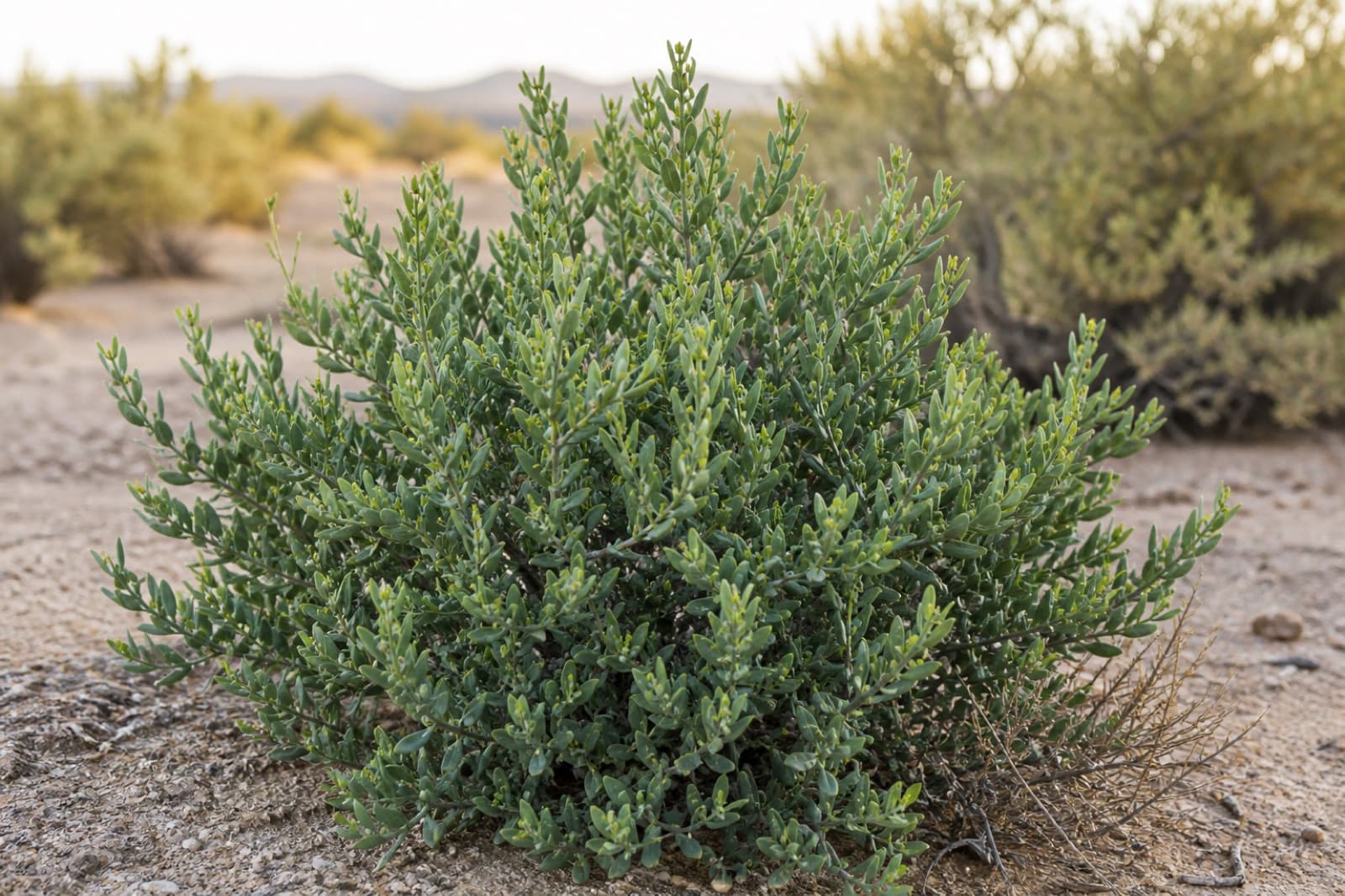
Simmondsia jojoba (often written simply as jojoba) is a tough evergreen shrub native to arid regions of the southwestern United States and northwestern Mexico. You may also see the scientific name Simmondsia chinensis on labels — both refer to the same economically important plant.
How to recognize Simmondsia jojoba
In the field, Simmondsia jojoba usually forms a rounded, dense shrub with thick, leathery, gray-green leaves. The leaves are opposite, oval to lance-shaped, and adapted to reduce water loss in hot, dry climates. Plants are typically dioecious (separate male and female individuals), and female plants produce the distinctive acorn-like seeds used for jojoba oil.
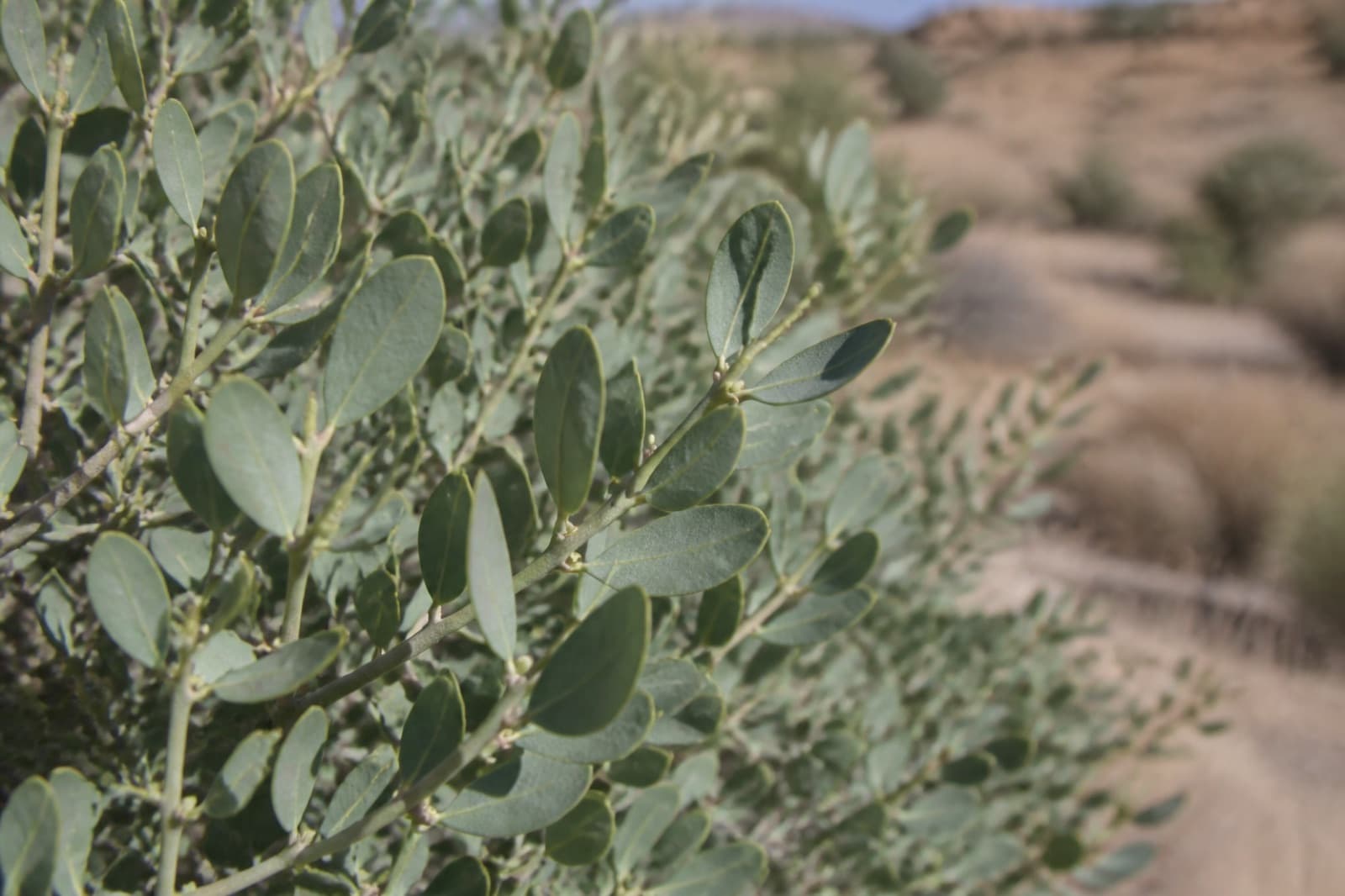
If you find a similar shrub and want a quick confirmation, upload a clear leaf or whole-plant photo to our plant name finder or homepage plant identifier.
Where Simmondsia jojoba grows
This species thrives in well-drained soils, full sun, and low rainfall. It is a classic Sonoran and Mojave Desert plant, valued in xeriscaping because it tolerates drought once established. Outside its native range, it needs excellent drainage and careful winter protection in colder climates.
Why jojoba is commercially important
Jojoba “oil” is technically a liquid wax ester pressed from the seeds. It is widely used in cosmetics and personal care because it is stable and feels light on skin. That commercial fame is why people search specifically for simmondsia jojoba rather than only the common name “jojoba.”
Identification tips before you buy or plant
- Look for opposite, thick, dull green leaves rather than thin soft foliage.
- Check nursery tags for Simmondsia jojoba / Simmondsia chinensis.
- Confirm you have space for a woody shrub, not a small annual herb.
- Ask whether the plant is male, female, or sold as a mixed set if seed production matters to you.
Once identified, Simmondsia jojoba rewards gardeners who respect its desert origins: bright light, sparse water after establishment, and soil that never stays soggy.
Think you found jojoba in the wild or nursery?
Confirm Simmondsia jojoba from a photo with our free identifier.
Identify the plant